Did you know that the presence of a cat or dog in a counseling office can speed the therapeutic process for some patients? Animal-assisted therapy (AAT) was introduced by psychologist Boris Levinson in the 1950s when he discovered that his dog Jingles was able to connect with autistic children in a way humans had not.
Since then, AAT has continued to develop as a therapeutic science. Although dogs are the most frequently used therapy animals, cats, birds, rabbits, horses, donkeys, llamas and even pigs and snakes participate in different programs.
According to research, when people hold and stroke an animal, many positive physical and psychological transitions occur, including lowered blood pressure, a feeling of calm, the ability to be more extroverted and verbal, decreased loneliness and increased self-esteem.
Susan Lee Bady, a clinical social worker who uses cats in her practice, says the cats serve a number of different functions, including facilitating emotional expression and touching; encouraging spontaneity and fun; and providing the kind of unconditional love seldom found in human relationships.
Bady's patients report feelings of peacefulness and serenity when they watch cats cuddle and groom each other. This feeling is enhanced when a cat jumps into a patient's lap. Some patients speak more freely while holding or petting a cat. Patients out of touch with their emotions are sometimes able to identify and understand their emotions by watching the behavior of the cats.
Patients with trust issues learn to trust Bady by watching her with her cats. Bady's cats, like all pets, are independent souls. This independence and lack of predictability helps needy or insecure patients cope better with what they perceive as personal slights in everyday life. For example, when patients feel a cat doesn't like them because he or she won't sit in their lap, Bady uses that reaction to open a discussion about their neediness and the problems it might be creating in their lives.
There's a plethora of literature amassed on the many different ways animals help children and adults with psychiatric illness, mood disorders, developmental and learning disabilities, post-traumatic stress disorder (PTSD), and other mental and emotional challenges.
One study of hospitalized psychiatric patients concluded that animal-assisted therapy significantly reduced anxiety for patients with psychotic, mood and other disorders.
Another study published in the Journals of Gerontology showed that animal-assisted therapy reduced loneliness in residents of long-term care facilities - especially for those folks who previously owned pets.
A study conducted at the College of Veterinary Medicine at Washington State University concluded children with pervasive development disorders (PDD) who lack social communication abilities "exhibited a more playful mood, were more focused, and were more aware of their social environments when in the presence of a therapy dog."
In a report titled "Animal-Assisted Therapy in Psychiatric Rehabilitation," researchers studied the effect of AAT on a group of male and female psychiatric inpatients. By the fourth week of the study, "patients in the AAT group were significantly more interactive with other patients, scored higher on measures of smiles and pleasure, were more sociable and helpful with others and were more active and responsive to surroundings."
Aaron Katcher, M.D., a psychiatrist and professor of psychiatry at the University of Pennsylvania, claims there is tremendous evidence for the success of animal-assisted therapy in controlled studies, such as depressed patients had increased socialization and decreased depression; children with severe ADHD and conduct disorder had decreased aggressive behavior and improved attention; patients with autism or developmental disabilities had increased socialization and improved attention; and patients with Alzheimer's had improved attention and decreased aggression and anger.
According to Katcher, there is also clinical and anecdotal evidence that patients with dissociative disorders and agoraphobia are able to decrease anxiety and increase social skills when they have companion animals.
With all the benefits pets provide, shouldn't you consider bringing one of these little miracle workers home today? Visit your local shelter for the largest selection of adoptable pets in your community.
Ed Boks is the executive director of the Yavapai Humane Society. He can be reached at eboks@yavapaihumane.org or by calling 445-2666, ext. 21.
Monday, January 30, 2012
Sunday, January 29, 2012
Children's moral development influenced by adopting a pet
Psychologist, animal welfare advocate and human-animal bond expert Dr. Pia Salk (niece of polio vaccine developer Jonas Salk and daughter of bestselling author/psychologist Lee Salk) is a regular contributor to Martha Stewart's The Daily Wag. In a recent article, Salk asked the provocative question, "Can adopting a shelter animal make a difference in your child's moral development?"
Salk offers important insight into the values we teach our children when we adopt a companion animal from a shelter. According to Salk, the very decision to devote family resources to caring for an animal in need sends a clear message to your children about who you are and what you stand for.
When you adopt a shelter pet, Salk explains, children internalize important values - "We are a family that uses the power of choice to save a life." This teaches kids that by taking personal responsibility, their choices can affect the larger community.
Children need to feel they can impact their world. Parents need to give children opportunities to do so in positive, pro-social ways. Adopting and caring for an animal can provide this opportunity.
Where should this life lesson begin? Salk suggests a family meeting to discuss if the family is willing and able to meet an animal's needs. Together, a family should explore every facet of these questions, such as: Do we need landlord permission? How much exercise will the animal need? How will we provide medical care? Who will be responsible for feeding, training and walks? Who will care for the animal during vacations? How will a pet affect plans to move? Such conversations teach the importance of planning, navigating around potential obstacles and committing to a goal, for better or worse. This exercise is an important step in teaching children the inherent value of the animal's life and well-being.
Answering these questions will also help you determine what sort of animal is a good match for your family. Don't hesitate to ask your local shelter for help in making this decision.
The choice around which animal to adopt can lead to deeper discussions about family values. Perhaps your family is willing to provide a home to an older pet abandoned because of an eviction, or maybe to a cat who has lost an eye or a limb. These choices help children see past age and physical "limitations" so they appreciate another being's intrinsic worth. This teaches acceptance and gives children a chance to witness the inspiring resilience of animals.
Perhaps your family is willing to take in a breed disadvantaged by negative stereotypes. This teaches kids to learn for themselves and not be influenced by a biased or misinformed public perception.
For kids who are adopted, adopting a pet provides an opportunity to talk about their feelings while learning more about their family's love and compassion for others in need. Likewise, for a child who is hearing-impaired or has a condition such as diabetes, adopting an animal with a similar condition, or other special need (provided the resources exist to properly manage it), can be therapeutic and enriching for all involved.
"There is no limit to the great lessons you can teach your children when you opt to adopt," says Salk. "These lessons benefit everyone involved and they live on in the minds of children, manifesting in a lifetime of compassionate acts."
What better time to have this compassionate, life-saving family discussion? Visit your local shelter today to see all the pets waiting for the perfect home - yours.
Ed Boks is the executive director of the Yavapai Humane Society. He can be reached at eboks@yavapaihumane.org or by calling 445-2666, ext. 21.
Salk offers important insight into the values we teach our children when we adopt a companion animal from a shelter. According to Salk, the very decision to devote family resources to caring for an animal in need sends a clear message to your children about who you are and what you stand for.
When you adopt a shelter pet, Salk explains, children internalize important values - "We are a family that uses the power of choice to save a life." This teaches kids that by taking personal responsibility, their choices can affect the larger community.
Children need to feel they can impact their world. Parents need to give children opportunities to do so in positive, pro-social ways. Adopting and caring for an animal can provide this opportunity.
Where should this life lesson begin? Salk suggests a family meeting to discuss if the family is willing and able to meet an animal's needs. Together, a family should explore every facet of these questions, such as: Do we need landlord permission? How much exercise will the animal need? How will we provide medical care? Who will be responsible for feeding, training and walks? Who will care for the animal during vacations? How will a pet affect plans to move? Such conversations teach the importance of planning, navigating around potential obstacles and committing to a goal, for better or worse. This exercise is an important step in teaching children the inherent value of the animal's life and well-being.
Answering these questions will also help you determine what sort of animal is a good match for your family. Don't hesitate to ask your local shelter for help in making this decision.
The choice around which animal to adopt can lead to deeper discussions about family values. Perhaps your family is willing to provide a home to an older pet abandoned because of an eviction, or maybe to a cat who has lost an eye or a limb. These choices help children see past age and physical "limitations" so they appreciate another being's intrinsic worth. This teaches acceptance and gives children a chance to witness the inspiring resilience of animals.
Perhaps your family is willing to take in a breed disadvantaged by negative stereotypes. This teaches kids to learn for themselves and not be influenced by a biased or misinformed public perception.
For kids who are adopted, adopting a pet provides an opportunity to talk about their feelings while learning more about their family's love and compassion for others in need. Likewise, for a child who is hearing-impaired or has a condition such as diabetes, adopting an animal with a similar condition, or other special need (provided the resources exist to properly manage it), can be therapeutic and enriching for all involved.
"There is no limit to the great lessons you can teach your children when you opt to adopt," says Salk. "These lessons benefit everyone involved and they live on in the minds of children, manifesting in a lifetime of compassionate acts."
What better time to have this compassionate, life-saving family discussion? Visit your local shelter today to see all the pets waiting for the perfect home - yours.
Ed Boks is the executive director of the Yavapai Humane Society. He can be reached at eboks@yavapaihumane.org or by calling 445-2666, ext. 21.


Saturday, January 28, 2012
Circle of compassion rippling through universities
The New York Times recently ran an article by James Gorman on the status of animals in universities across the United States.
Historically, academia relegated animals to the province of science. Rats were confined to psychology labs; cows to veterinary barns; monkeys to neuroscience labs; and preserved frogs to the dissecting tables of undergraduates. At the same time, the attention of liberal arts and social sciences was directed solely toward human interests.
No more. This spring Harvard is offering "Humans, Animals and Cyborgs," while Dartmouth presents "Animals and Women in Western Literature" and New York University offers "Animals, People and Those in Between."
These courses evidence a growing interest in animal studies. In fact, anything having to do with any connection between humans and animals in art, literature, sociology, anthropology, film, theater, philosophy, and religion is fair game for animal studies.
The Animals and Society Institute, itself only six years old, lists more than 100 animal studies courses in American universities. Institutes, book series and conferences are proliferating as formal academic programs emerge.
Wesleyan University, with the Animals and Society Institute, began a summer fellowship program this year. Michigan State now allows doctoral and master's students in different fields to concentrate their work in animal studies. At least two institutions offer undergraduate majors, and New York University is allowing undergraduates to minor in animal studies.
Scholars never actually ignored animals. Thinkers and writers of all ages grappled with human/animal issues and the treatment of animals. However, the current burst of interest is unprecedented.
Jane Desmond of the University of Illinois, a cultural anthropologist, says public sensitivities are largely responsible for all the animal attention.
The trend may be traced back to Jane Goodall, who first showed us the social and emotional side of chimpanzees in a way we could not ignore. Most recently the popular YouTube video of a New Caledonian crow bending a wire into a tool to fish food out of a container caused academics to wonder how old a child would have to be to figure that out.
The most direct influence may have come from philosophy. Peter Singer's 1975 book "Animal Liberation" was a landmark in arguing against killing, eating and experimenting on animals. He questioned how humans could justify causing animals pain.
Lori Gruen, head of philosophy and coordinator of the summer fellowship program in animal studies at Wesleyan, said, "Thirty years ago animals were at the margins of philosophical discussions; now animals are in the center of ethical discussion."
Another strain of philosophy, exemplified by the French writer Jacques Derrida, has had an equally strong influence. He considered the way we think of animals, and why we distance ourselves from them. In "The Animal that Therefore I Am," he discusses not only what he thinks of his cat, but what his cat thinks of him.
What animals think is something scholars are taking more seriously. Referring to academic programs that focused on disenfranchised populations like women or African-Americans, Dr. Weil of Wesleyan said, "Unlike (those populations, animals) can't speak or write in language the academy recognizes." This communication deficit lent itself to academics raising moral arguments on behalf of the animals.
The great variety of subjects, methods, interests and assumptions in animal studies raises serious questions about how it all hangs together. Law schools have courses in animals and the law; veterinary schools have courses about the human connection to animals; and some courses use animals in therapy as part of animal studies.
None of this diversity diminishes the excitement in what's going on, although there are some academics within the animal studies rubric who think the scholarly ferment has a long way to go before it can truly consider itself an academic field.
One thing the new interest in animal studies does not lack is energy. If you want to better understand what all the scholarly excitement is about visit your local shelter for your homework assignment and adopt a pet today.
Ed Boks is the executive director of the Yavapai Humane Society. He can be reached at eboks@yavapaihumane.org or by calling 445-2666, ext. 21.
Historically, academia relegated animals to the province of science. Rats were confined to psychology labs; cows to veterinary barns; monkeys to neuroscience labs; and preserved frogs to the dissecting tables of undergraduates. At the same time, the attention of liberal arts and social sciences was directed solely toward human interests.
No more. This spring Harvard is offering "Humans, Animals and Cyborgs," while Dartmouth presents "Animals and Women in Western Literature" and New York University offers "Animals, People and Those in Between."
These courses evidence a growing interest in animal studies. In fact, anything having to do with any connection between humans and animals in art, literature, sociology, anthropology, film, theater, philosophy, and religion is fair game for animal studies.
The Animals and Society Institute, itself only six years old, lists more than 100 animal studies courses in American universities. Institutes, book series and conferences are proliferating as formal academic programs emerge.
Wesleyan University, with the Animals and Society Institute, began a summer fellowship program this year. Michigan State now allows doctoral and master's students in different fields to concentrate their work in animal studies. At least two institutions offer undergraduate majors, and New York University is allowing undergraduates to minor in animal studies.
Scholars never actually ignored animals. Thinkers and writers of all ages grappled with human/animal issues and the treatment of animals. However, the current burst of interest is unprecedented.
Jane Desmond of the University of Illinois, a cultural anthropologist, says public sensitivities are largely responsible for all the animal attention.
The trend may be traced back to Jane Goodall, who first showed us the social and emotional side of chimpanzees in a way we could not ignore. Most recently the popular YouTube video of a New Caledonian crow bending a wire into a tool to fish food out of a container caused academics to wonder how old a child would have to be to figure that out.
The most direct influence may have come from philosophy. Peter Singer's 1975 book "Animal Liberation" was a landmark in arguing against killing, eating and experimenting on animals. He questioned how humans could justify causing animals pain.
Lori Gruen, head of philosophy and coordinator of the summer fellowship program in animal studies at Wesleyan, said, "Thirty years ago animals were at the margins of philosophical discussions; now animals are in the center of ethical discussion."
Another strain of philosophy, exemplified by the French writer Jacques Derrida, has had an equally strong influence. He considered the way we think of animals, and why we distance ourselves from them. In "The Animal that Therefore I Am," he discusses not only what he thinks of his cat, but what his cat thinks of him.
What animals think is something scholars are taking more seriously. Referring to academic programs that focused on disenfranchised populations like women or African-Americans, Dr. Weil of Wesleyan said, "Unlike (those populations, animals) can't speak or write in language the academy recognizes." This communication deficit lent itself to academics raising moral arguments on behalf of the animals.
The great variety of subjects, methods, interests and assumptions in animal studies raises serious questions about how it all hangs together. Law schools have courses in animals and the law; veterinary schools have courses about the human connection to animals; and some courses use animals in therapy as part of animal studies.
None of this diversity diminishes the excitement in what's going on, although there are some academics within the animal studies rubric who think the scholarly ferment has a long way to go before it can truly consider itself an academic field.
One thing the new interest in animal studies does not lack is energy. If you want to better understand what all the scholarly excitement is about visit your local shelter for your homework assignment and adopt a pet today.
Ed Boks is the executive director of the Yavapai Humane Society. He can be reached at eboks@yavapaihumane.org or by calling 445-2666, ext. 21.
Friday, January 27, 2012
Euthanasia not acceptable for healthy or treatable pets
The mayor of Los Angeles once told me that he considered managing animal shelters more difficult than running a metropolis like L.A. I had to agree. Animal shelters represent the worst - or best - in a community. They are a nexus of heartache and compassion. When one of these outweighs the other, the soul of a community is revealed.
Understanding the daily challenges inherent in managing animal shelters, my heart goes out to the Arizona Humane Society (AHS). AHS is caught up in a public relations nightmare involving a homeless man who brought his kitten to them for medical care. Daniel Dockery, 49 years old, had hand-raised a 9-month old kitten since she was born. Dockery attributed his companionship with the kitten, Scruffy, to his ability to stay off heroin.
When Scruffy suffered "non-life threatening injuries," Dockery rushed her to AHS where a medical examination determined it would cost $400 to treat her. Unable to pay the fee, Dockery surrendered the kitten to AHS after being assured she would be treated and placed in foster care. Several hours later, Scruffy was euthanized. The report of her death went viral. It seemed every national mainstream and alternate news source reported on Scruffy's untimely death. The resulting outrage forced AHS to hire a publicist to help alleviate public ire.
The publicist explained that Dockery's lack of funds combined with the number of animals in need of urgent care led to the decision to euthanize Scruffy. The betrayal of trust left Dockery feeling responsible for Scruffy's death and prompted an angry public to threaten withholding funds from AHS.
One positive outcome from this ordeal is that AHS created an account funded by donations to cover the cost of emergency animal care. The account is similar to the Yavapai Humane Society's STAR (Special Treatment And Recovery) fund, which is funded by donations and is responsible for saving the lives of many homeless animals in need of critical care.
Having been involved in animal shelter management for 30 years, I understand that mistakes can be made. I have also learned that policies and procedures can be implemented to help ensure errors are made on the side of saving a life, not taking it.
I share this lamentable story because it sits in juxtaposition to many life and death decisions made by the Yavapai Humane Society. For instance, in recent weeks YHS took in four senior pets, each surrendered by their respective owner claiming the pet was suffering from a life threatening illness.
While YHS provides euthanasia to owned animals who are irremediably suffering, we make it clear to pet owners that we will not euthanize an animal when it is determined that the animal is not suffering, is actually healthy, or can be treated.
In each of these cases, after ownership was legally surrendered to YHS, medical examinations were performed. A consultation with the private veterinarian handling the healthcare of each animal prior to surrender was conducted when possible. In each case no life threatening condition or suffering could be found. These animals have since been placed for adoption in hope they will live their remaining years in a loving home.
Every day employees at animal shelters across the United States are faced with decisions to kill or not to kill. Whether it is killing an animal too quickly or not quickly enough, shelters often find they are damned if they do or damned if they don't.
If the Yavapai Humane Society is to be judged, let it always be for trying to save the lives of animals others have given up on. Since embracing our "no-kill ethic," the Yavapai Humane Society has reduced shelter killing 77 percent - making our community the safest for pets in all Arizona.
If you are able to help YHS sustain this life-saving mission (regardless of age) please make a tax-deductible donation to the Yavapai Humane Society today.
Ed Boks is the executive director of the Yavapai Humane Society. He can be reached at eboks@yavapaihumane.org or by calling 445-2666, ext. 21.
Understanding the daily challenges inherent in managing animal shelters, my heart goes out to the Arizona Humane Society (AHS). AHS is caught up in a public relations nightmare involving a homeless man who brought his kitten to them for medical care. Daniel Dockery, 49 years old, had hand-raised a 9-month old kitten since she was born. Dockery attributed his companionship with the kitten, Scruffy, to his ability to stay off heroin.
When Scruffy suffered "non-life threatening injuries," Dockery rushed her to AHS where a medical examination determined it would cost $400 to treat her. Unable to pay the fee, Dockery surrendered the kitten to AHS after being assured she would be treated and placed in foster care. Several hours later, Scruffy was euthanized. The report of her death went viral. It seemed every national mainstream and alternate news source reported on Scruffy's untimely death. The resulting outrage forced AHS to hire a publicist to help alleviate public ire.
The publicist explained that Dockery's lack of funds combined with the number of animals in need of urgent care led to the decision to euthanize Scruffy. The betrayal of trust left Dockery feeling responsible for Scruffy's death and prompted an angry public to threaten withholding funds from AHS.
One positive outcome from this ordeal is that AHS created an account funded by donations to cover the cost of emergency animal care. The account is similar to the Yavapai Humane Society's STAR (Special Treatment And Recovery) fund, which is funded by donations and is responsible for saving the lives of many homeless animals in need of critical care.
Having been involved in animal shelter management for 30 years, I understand that mistakes can be made. I have also learned that policies and procedures can be implemented to help ensure errors are made on the side of saving a life, not taking it.
I share this lamentable story because it sits in juxtaposition to many life and death decisions made by the Yavapai Humane Society. For instance, in recent weeks YHS took in four senior pets, each surrendered by their respective owner claiming the pet was suffering from a life threatening illness.
While YHS provides euthanasia to owned animals who are irremediably suffering, we make it clear to pet owners that we will not euthanize an animal when it is determined that the animal is not suffering, is actually healthy, or can be treated.
In each of these cases, after ownership was legally surrendered to YHS, medical examinations were performed. A consultation with the private veterinarian handling the healthcare of each animal prior to surrender was conducted when possible. In each case no life threatening condition or suffering could be found. These animals have since been placed for adoption in hope they will live their remaining years in a loving home.
Every day employees at animal shelters across the United States are faced with decisions to kill or not to kill. Whether it is killing an animal too quickly or not quickly enough, shelters often find they are damned if they do or damned if they don't.
If the Yavapai Humane Society is to be judged, let it always be for trying to save the lives of animals others have given up on. Since embracing our "no-kill ethic," the Yavapai Humane Society has reduced shelter killing 77 percent - making our community the safest for pets in all Arizona.
If you are able to help YHS sustain this life-saving mission (regardless of age) please make a tax-deductible donation to the Yavapai Humane Society today.
Ed Boks is the executive director of the Yavapai Humane Society. He can be reached at eboks@yavapaihumane.org or by calling 445-2666, ext. 21.
Thursday, January 26, 2012
Woman sues to prove animals are 'living souls,' not property
"Today Show" contributor Scott Stump recently reported on a New Yorker named Elena Zakharova who filed a civil suit in a New York court against an Upper East Side pet store. The store, Raising Rover, sold Zakharova a puppy that developed numerous medical complications. The suit seeks to hold the store liable for the dog's pain and suffering, and medical bills, as if the dog were a person rather than an inanimate product.
New York law considers pets "property,' but the complaint wants to change that definition. The goal is to help shut down puppy mills that often mass-produce animals sold in boutique pet stores like Raising Rover, where "Umka" was purchased.
"Umka is a living soul,' the suit reads. " She feels love and pain.'
Ownership of Raising Rover has changed since Zakharova purchased Umka.
"I know nothing about the sale. The prior owner has the records. We are careful about where we get our puppies," Raising Rover's new owner Ben Logan told the New York Daily News. Logan declined to provide information about the prior owner.
Zakharova is seeking compensation for surgeries and medical treatment for Umka totaling about $8,000. She also wants a full return of the dog's sale price plus interest since the date of purchase in February 2011. Zakharova intends to donate any award to an animal charity, Lask said.
New York state has a "Puppy Lemon Law' that allows buyers to return sick animals to a pet store within 14 days for a full refund. The law is meant to slow puppy mills' mass production of dogs with inherent medical problems. However, Umka's medical issues did not become apparent for months after Zakharova purchased the dog.
"The Puppy Lemon Law doesn't cut it,' Lask said.
If the definition of a pet is changed from property to a sentient being, it could substantially change the amount of damages awarded when an owner buys a defective dog born in a puppy mill. That could have a chilling effect on pet stores buying animals from puppy mills fearing large payouts from lawsuits.
"It's going to put a number on my dog's broken hips that you created because you're negligent, you're greedy, and you're mass-producing puppies,' Lask said. "Right now, even if you return it, they just kill it, which is so inhumane.'
Lask is an animal lover who owns a Chihuahua named Lincoln who was found to have a hole in his skull months after her purchase. That discovery led her to investigate the practices of puppy mills. She waited six years to find a case to help correct the larger issue.
"It's much bigger than this case,' she said. "I am looking to shut down the puppy mill world.'
The main issue will be proving to a judge that pets are living souls who experience feelings of pain and emotion. "Human beings have treated other humans as property in history before recognizing it was wrong," said Lask, "so it's not too much of a stretch to ask the courts to change the definition."
"It's already a felony to abuse an animal. If animals have criminal rights, why not put rights on a damaged leg or a heart condition? If we're not equating (an animal) to a human being, and we're not equating it to a table, there has to be something in the middle.'
The suit brings to light the practices of puppy mills and their damaging effects on animals and their human owners. A 2011 investigation by The Humane Society of the United States revealed that Raising Rover, where Umka was purchased, was one of 11 upscale pet stores that purchased animals from Midwestern puppy mills with horrendous conditions.
The moral of the story is buyer beware! Experts agree consumers should opt to adopt from shelters like the Yavapai Humane Society to avoid the trauma that comes from paying exorbitant fees for pet store animals with hidden defects.
New York law considers pets "property,' but the complaint wants to change that definition. The goal is to help shut down puppy mills that often mass-produce animals sold in boutique pet stores like Raising Rover, where "Umka" was purchased.
"Umka is a living soul,' the suit reads. " She feels love and pain.'
Ownership of Raising Rover has changed since Zakharova purchased Umka.
"I know nothing about the sale. The prior owner has the records. We are careful about where we get our puppies," Raising Rover's new owner Ben Logan told the New York Daily News. Logan declined to provide information about the prior owner.
Zakharova is seeking compensation for surgeries and medical treatment for Umka totaling about $8,000. She also wants a full return of the dog's sale price plus interest since the date of purchase in February 2011. Zakharova intends to donate any award to an animal charity, Lask said.
New York state has a "Puppy Lemon Law' that allows buyers to return sick animals to a pet store within 14 days for a full refund. The law is meant to slow puppy mills' mass production of dogs with inherent medical problems. However, Umka's medical issues did not become apparent for months after Zakharova purchased the dog.
"The Puppy Lemon Law doesn't cut it,' Lask said.
If the definition of a pet is changed from property to a sentient being, it could substantially change the amount of damages awarded when an owner buys a defective dog born in a puppy mill. That could have a chilling effect on pet stores buying animals from puppy mills fearing large payouts from lawsuits.
"It's going to put a number on my dog's broken hips that you created because you're negligent, you're greedy, and you're mass-producing puppies,' Lask said. "Right now, even if you return it, they just kill it, which is so inhumane.'
Lask is an animal lover who owns a Chihuahua named Lincoln who was found to have a hole in his skull months after her purchase. That discovery led her to investigate the practices of puppy mills. She waited six years to find a case to help correct the larger issue.
"It's much bigger than this case,' she said. "I am looking to shut down the puppy mill world.'
The main issue will be proving to a judge that pets are living souls who experience feelings of pain and emotion. "Human beings have treated other humans as property in history before recognizing it was wrong," said Lask, "so it's not too much of a stretch to ask the courts to change the definition."
"It's already a felony to abuse an animal. If animals have criminal rights, why not put rights on a damaged leg or a heart condition? If we're not equating (an animal) to a human being, and we're not equating it to a table, there has to be something in the middle.'
The suit brings to light the practices of puppy mills and their damaging effects on animals and their human owners. A 2011 investigation by The Humane Society of the United States revealed that Raising Rover, where Umka was purchased, was one of 11 upscale pet stores that purchased animals from Midwestern puppy mills with horrendous conditions.
The moral of the story is buyer beware! Experts agree consumers should opt to adopt from shelters like the Yavapai Humane Society to avoid the trauma that comes from paying exorbitant fees for pet store animals with hidden defects.
Saturday, June 04, 2011
No-Kill - By the Numbers - Update
The Yavapai Humane Society (YHS) has completed eleven months since implementing its “no-kill ethic”. This ethic embodies our commitment to the proposition that for every animal who comes through our doors there is a kind and loving person or family, and it is our mission to bring them together.
Many ask what effect our “no-kill ethic” has had in the lives of the animals in our care. There are three numbers that animal shelters use to explain their success, or failure, in reducing pet euthanasia (or killing).
1. The Live Release Rate (LRR): This number refers to the animals who get out of a shelter alive. It includes adoptions, transfers to rescue organizations, and lost pets returned to their owners. Some animal shelter experts claim anything over an 85% LRR can be considered “no-kill”.
Since July 2010, YHS has maintained an 87% Live Release Rate (compared to 71% for the same evelven months a year earlier).
2. The Euthanasia Rate: This number is the inverse of the LLR and reports the actual number of animals euthanized.
Since July 2010, YHS’ euthanasia rate fell 67%. This difference represents three additional lives saved each and every day.
Without question, the above numbers are cause for celebration. However, they don’t explain how YHS compares to other communities. The next number does, which is why I suspect so many shelters avoid talking about it:
3. The Per Capita Rate: This number refers to the number of animals killed per 1,000 residents. For instance, if a community of 500,000 people kills 5,000 dogs and cats per year, you divide 5,000 animals by 500 (groups of 1,000 residents) to determine a kill rate of 10 animals per 1,000 residents. The per capita rate provides an objective “apples to apples” comparison to other communities.
ANIMAL PEOPLE magazine issues an annual National Shelter Killing Report based on this number. In the 2009 report, the national kill rate average was 13.5 animals per 1,000 U.S. residents.
In 2009, YHS euthanized 17.25 animals per 1,000 residents; sadly, a substantially higher rate than the national average.
However, over the past 12 months (June 2010 - May 2011) the YHS kill rate fell to 4.7, well below the national average; thanks to applying the “no-kill ethic”. This is using the number of animals killed (700) divided by the 2010 Census number of 146,000.
Clearly, YHS has come a long way - from 17.25 to 4.7; but just as clearly, we have a long way yet to go. To create a “no-kill community” requires all of us to play our part as responsible pet owners.
Here is the Top Five List for how you can help transform our community into a truly humane society:
1. License your dog and microchip your pets. YHS has one of the highest “Return to Owner” rates in the nation (68%). When your pet comes to YHS with a current license or microchip he has a guaranteed ticket home.
2. Obey the leash law. Don’t allow your pet to run at large, especially if not spayed or neutered.
3. Spay/Neuter all your pets. Pets should be spayed or neutered before sexual maturity. Call the YHS Spay/Neuter Clinic to make an appointment today!
4. Become a YHS Member by making a live saving donation. Consider YHS in your Planned Giving strategies.
5. Join the YHS Volunteer Organization. Your involvement brings new energy and expertise to our organization and will make a big difference in the lives of the animals and people of Yavapai County.
Call 928.455.2666 Ext. 21 if you have questions or ideas about how you can help. Together we can make Yavapai County the safest community in Arizona for our pets.
Many ask what effect our “no-kill ethic” has had in the lives of the animals in our care. There are three numbers that animal shelters use to explain their success, or failure, in reducing pet euthanasia (or killing).
1. The Live Release Rate (LRR): This number refers to the animals who get out of a shelter alive. It includes adoptions, transfers to rescue organizations, and lost pets returned to their owners. Some animal shelter experts claim anything over an 85% LRR can be considered “no-kill”.
Since July 2010, YHS has maintained an 87% Live Release Rate (compared to 71% for the same evelven months a year earlier).
2. The Euthanasia Rate: This number is the inverse of the LLR and reports the actual number of animals euthanized.
Since July 2010, YHS’ euthanasia rate fell 67%. This difference represents three additional lives saved each and every day.
Without question, the above numbers are cause for celebration. However, they don’t explain how YHS compares to other communities. The next number does, which is why I suspect so many shelters avoid talking about it:
3. The Per Capita Rate: This number refers to the number of animals killed per 1,000 residents. For instance, if a community of 500,000 people kills 5,000 dogs and cats per year, you divide 5,000 animals by 500 (groups of 1,000 residents) to determine a kill rate of 10 animals per 1,000 residents. The per capita rate provides an objective “apples to apples” comparison to other communities.
ANIMAL PEOPLE magazine issues an annual National Shelter Killing Report based on this number. In the 2009 report, the national kill rate average was 13.5 animals per 1,000 U.S. residents.
In 2009, YHS euthanized 17.25 animals per 1,000 residents; sadly, a substantially higher rate than the national average.
However, over the past 12 months (June 2010 - May 2011) the YHS kill rate fell to 4.7, well below the national average; thanks to applying the “no-kill ethic”. This is using the number of animals killed (700) divided by the 2010 Census number of 146,000.
Clearly, YHS has come a long way - from 17.25 to 4.7; but just as clearly, we have a long way yet to go. To create a “no-kill community” requires all of us to play our part as responsible pet owners.
Here is the Top Five List for how you can help transform our community into a truly humane society:
1. License your dog and microchip your pets. YHS has one of the highest “Return to Owner” rates in the nation (68%). When your pet comes to YHS with a current license or microchip he has a guaranteed ticket home.
2. Obey the leash law. Don’t allow your pet to run at large, especially if not spayed or neutered.
3. Spay/Neuter all your pets. Pets should be spayed or neutered before sexual maturity. Call the YHS Spay/Neuter Clinic to make an appointment today!
4. Become a YHS Member by making a live saving donation. Consider YHS in your Planned Giving strategies.
5. Join the YHS Volunteer Organization. Your involvement brings new energy and expertise to our organization and will make a big difference in the lives of the animals and people of Yavapai County.
Call 928.455.2666 Ext. 21 if you have questions or ideas about how you can help. Together we can make Yavapai County the safest community in Arizona for our pets.
Saturday, February 19, 2011
Winter weather pet tips: If it's cold for you, it's cold for them!
I moved to beautiful Prescott, Arizona from sunny Los Angeles in June of last year. Being an outdoors enthusiast, I love the quality of life provided by my adopted community. However, being a Southern California boy, I was a bit unprepared for the dramatic drop in temperature. So I thought I would review for all our cold climate resident pet owners the cold weather dangers for our pets. Be aware of these cold weather safety tips for your pets:
• Remember: If it is cold for you, it is cold for your pets, too! A common mistake people make is to assume our pets are better equipped to handle cold weather just because they are animals. They are not just animals; they are pets. They are the result of thousands of years of genetic reengineering that has left most companion animals completely dependent on our common sense.
• Although YHS believes all pets should be kept indoors, if you must keep your dog outside for any period of time, provide a dry, draft free dog-house. It should be large enough for your dog to sit and lay down comfortably but small enough to hold his body heat. The floor should be off the ground and covered with cedar shavings or straw. Turn the shelter away from the wind, and cover the door with a waterproof burlap or heavy plastic.
• Make sure all outside water sources don't freeze over. Pets can't burn the calories they need to stay warm without a fresh supply of water.
• Be aware of salt and other ice-melting chemicals on the streets and sidewalks. They are an irritant to your pet's paws and may cause injury if ingested. Use a warm, moist cloth to clean off any salt or chemical residues after a walk. Be the first on your block to provide your dog with a set of booties to protect his paws from these harsh and cold chemicals.
• Check your garage and driveway for antifreeze. Antifreeze tastes sweet to your pet and most brands are poisonous. Contact your veterinarian immediately if you suspect your pet has consumed antifreeze.
• Grooming is important; a matted coat will not protect your pet from the cold. Be watchful of ice or salt that may become entangled in long hair and remove it immediately.
• Don't let your pet venture onto frozen bodies of water. The ice may be too thin to support his weight and water rescues are both difficult and dangerous for the both of you.
• Be a good kitty Samaritan and slap the hood of your car before starting it. Cats often climb next to a warm engine during the night.
• Keep snowdrifts from piling up next to your fence, providing your pooch a way of escape. Make sure your dog is wearing a current dog license. In the event your dog does get away during this dangerous weather and YHS is able to rescue him, you will be assured of his return. If you love your pet, please license him or her.
• If you are flying with a pet, make sure the airline provides for your pet's safety and warmth. Some airlines restrict pets from flying when the temperature dips below a certain point. Call ahead to confirm.
Pets are part of the family; keep your family warm, and the winter months can be filled with wonderful memories. If you are looking for a pet to keep you warm this winter, come on by the Yavapai Humane Society and we'll help you select your next best friend.
Ed Boks is the executive director of the Yavapai Humane Society. He can be reached at ed@edboks.com or by calling 445-2666, ext. 21.
• Remember: If it is cold for you, it is cold for your pets, too! A common mistake people make is to assume our pets are better equipped to handle cold weather just because they are animals. They are not just animals; they are pets. They are the result of thousands of years of genetic reengineering that has left most companion animals completely dependent on our common sense.
• Although YHS believes all pets should be kept indoors, if you must keep your dog outside for any period of time, provide a dry, draft free dog-house. It should be large enough for your dog to sit and lay down comfortably but small enough to hold his body heat. The floor should be off the ground and covered with cedar shavings or straw. Turn the shelter away from the wind, and cover the door with a waterproof burlap or heavy plastic.
• Make sure all outside water sources don't freeze over. Pets can't burn the calories they need to stay warm without a fresh supply of water.
• Be aware of salt and other ice-melting chemicals on the streets and sidewalks. They are an irritant to your pet's paws and may cause injury if ingested. Use a warm, moist cloth to clean off any salt or chemical residues after a walk. Be the first on your block to provide your dog with a set of booties to protect his paws from these harsh and cold chemicals.
• Check your garage and driveway for antifreeze. Antifreeze tastes sweet to your pet and most brands are poisonous. Contact your veterinarian immediately if you suspect your pet has consumed antifreeze.
• Grooming is important; a matted coat will not protect your pet from the cold. Be watchful of ice or salt that may become entangled in long hair and remove it immediately.
• Don't let your pet venture onto frozen bodies of water. The ice may be too thin to support his weight and water rescues are both difficult and dangerous for the both of you.
• Be a good kitty Samaritan and slap the hood of your car before starting it. Cats often climb next to a warm engine during the night.
• Keep snowdrifts from piling up next to your fence, providing your pooch a way of escape. Make sure your dog is wearing a current dog license. In the event your dog does get away during this dangerous weather and YHS is able to rescue him, you will be assured of his return. If you love your pet, please license him or her.
• If you are flying with a pet, make sure the airline provides for your pet's safety and warmth. Some airlines restrict pets from flying when the temperature dips below a certain point. Call ahead to confirm.
Pets are part of the family; keep your family warm, and the winter months can be filled with wonderful memories. If you are looking for a pet to keep you warm this winter, come on by the Yavapai Humane Society and we'll help you select your next best friend.
Ed Boks is the executive director of the Yavapai Humane Society. He can be reached at ed@edboks.com or by calling 445-2666, ext. 21.
Sunday, February 13, 2011
Buyer beware: Make sure you're not supporting puppy mills

Oprah's intrepid investigative reporter found bitches who could barely walk after living a life of immobilized confinement. When people buy a puppy from a pet shop, newspaper ad or from the Internet, they are often supporting a cruel industry.
Puppy mills frequently house dogs in shockingly poor conditions, particularly the "breeding stock" who are caged and continually bred for years, without human companionship, and then killed, abandoned or sold to another "miller" after their fertility wanes.
These dogs are bred repeatedly without the prospect of ever becoming part of a family themselves. The result is hundreds of thousands of puppies churned out each year for sale at pet stores, over the Internet, and through newspaper ads. This practice will end only when people stop buying puppy mill puppies.
How do you separate fact from fiction?
1. Pet stores cater to impulsive buyers seeking convenient transactions. Unlike responsible rescuers and breeders, these stores don't interview prospective buyers to ensure responsible, lifelong homes for the pets they sell, and the stores may be staffed by employees with limited knowledge about pets and pet care.
2. Puppy mill puppies often have medical problems. These problems can lead to veterinary bills in the thousands of dollars. Pet retailers count on the bond between families and their new puppies being so strong that the puppies won't be returned. And guarantees are often so difficult to comply with that they are virtually useless. In addition, poor breeding and socialization practices can lead to behavioral problems throughout the puppies' lives.
3. A "USDA-inspected" breeder does not mean a "good" breeder. Be wary of claims that pet stores sell animals only from "USDA-inspected" breeders. The USDA enforces the Animal Welfare Act (AWA), which regulates commercial breeding operations. But the act doesn't require all commercial breeders to be licensed, and the USDA enforces only minimum-care standards and its inspection team is chronically understaffed. Breeders are required to provide food, water, and shelter, but not love, socialization, or freedom from confining cages. Many USDA-licensed and inspected puppy mills operate under squalid conditions with known violations of the AWA. Federal law prevents state and local authorities from blocking the shipping and sale of these animals across state lines, placing the burden on the customer to educate themselves.
4. Many disreputable breeders sell dogs directly to the public over the Internet and through newspaper ads. They often sell several breeds, but may advertise each breed separately and not in one large advertisement or website. These breeders are not inspected by any federal agency and, in many states, are not inspected by anyone at all.
5. Reputable breeders care where their puppies go and interview prospective adopters. They don't sell through pet stores or to families they haven't thoroughly checked out.
6. Purebred "papers" do not guarantee the quality of the breeder or the dog. Even the American Kennel Club (AKC) admits that it "cannot guarantee the quality or health of dogs in its registry."
When looking for a pet, do not buy from a pet store, and be wary of websites and newspaper ads. Don't buy a dog if you can't physically visit every area of the home or breeding facility where the seller keeps the dog.
Puppy mills will continue until people stop buying their dogs. Putting them out of business should be a goal of every dog lover. Instead, visit your local shelter or respectable rescue individual or organization where you will find a wide selection of healthy, well-socialized puppies and adult dogs - including purebreds - just waiting for that special home - yours.
Ed Boks is the executive director of the Yavapai Humane Society. He can be reached at ed@edboks.com or by calling 445-2666, ext. 21.
Thursday, February 03, 2011
No-Kill Ethic gives every dog a chance
There are moments on this job that make all the heartbreak and disappointment worthwhile. Recently Sandy Nelson, who had adopted one of our shelter animals a few months ago, called me to say, "Thank you for believing Xena (pronounced Zeena) deserved a chance to live." That was one of those moments.
When I first arrived at the Yavapai Humane Society (YHS) in July, I found Xena on the euthanasia list. Alone in her kennel, surrounded by barking dogs and abandoned by her family, she was understandably frightened. She responded to her new surroundings the only way she knew how - by demonstrating a behavior known as "fear-based aggression," which is not uncommon in shelter dogs when they first arrive.
Although we knew she was acting out her fear, her behavior was so fearsome that our most experienced animal handlers were unable to handle her. One of them admitted that, in all his years at YHS, Xena was the only dog that actually scared him. By the time I arrived that first week in July, it had already been determined that there was no chance Xena would ever be adopted. She was marked for euthanasia.
Public safety is the primary focus when evaluating dogs for adoption. With nearly 30 years experience in animal control and welfare, I understand better than most that there are dogs who are dangerously aggressive - dogs who should never be adopted out. Was Xena such a dog?
Imagine what must go on in the mind of a dog abandoned by her guardian. You wake up as you do every morning at the foot of your master's bed - but tonight you inexplicably find yourself alone in a cold concrete cell surrounded by excited barking dogs and strange people. Wouldn't you lash out in fear to defend yourself?
How do you discern a truly dangerous dog from an estranged pet?
Fortunately for Xena, renowned Malibu-based dog trainer and behaviorist Robert Cabral came to the rescue. Waiving his $250 per hour fee and all the expenses he incurred from driving himself and his two dogs, Silly and Goofy, to Prescott, he came to help staff and volunteers learn his life-saving techniques.
Cabral is not your typical dog trainer. His focus is not training beloved pets how to sit and stay in your backyard. His expertise is rehabilitating behaviorally challenged shelter dogs. He has been called upon to rehabilitate dogs adjudicated as "vicious" by city magistrates - dogs most of us wouldn't want to be in the same town with, much less on the same leash.
Believing that even these dogs deserve a chance at life is the essence of the no-kill ethic. These dogs do not come by this behavior naturally; they are trained directly or through neglect to be aggressive. The no-kill ethic asserts that every shelter animal deserves a chance at life. That means YHS will strive to treat animals in need of medical care as well as animals in need of behavioral rehabilitation in the effort to find each animal a loving home.
It was this ethic that saved Xena. The no-kill ethic created a way for the Nelsons and Xena to meet and fall in love. Today, Xena is in dog obedience classes, she happily sits for treats and she devotedly follows the Nelsons around their beautiful ranch in Chino Valley.
 Cabral has a slogan: "You can't save all the dogs in the world, but you can save one. Join the revolution." Xena is one of many dogs benefiting from Cabral's life-saving training. YHS staff applied what we learned and Xena responded. She overcame her fear, was removed from the euthanasia list and was adopted by the Nelsons in July.
Isn't it time you joined the life-saving revolution? Adopt a shelter animal today.
For more information on Robert Cabral or the many wonderful pets available for adoption at YHS, visit http://www.yavapaihumane.org/ and click on the Black Belt Dog Training logo.
Ed Boks is the executive director of the Yavapai Humane Society. He can be reached at ed@edboks.com or by calling 445-2666, ext. 21.
When I first arrived at the Yavapai Humane Society (YHS) in July, I found Xena on the euthanasia list. Alone in her kennel, surrounded by barking dogs and abandoned by her family, she was understandably frightened. She responded to her new surroundings the only way she knew how - by demonstrating a behavior known as "fear-based aggression," which is not uncommon in shelter dogs when they first arrive.
Although we knew she was acting out her fear, her behavior was so fearsome that our most experienced animal handlers were unable to handle her. One of them admitted that, in all his years at YHS, Xena was the only dog that actually scared him. By the time I arrived that first week in July, it had already been determined that there was no chance Xena would ever be adopted. She was marked for euthanasia.
Public safety is the primary focus when evaluating dogs for adoption. With nearly 30 years experience in animal control and welfare, I understand better than most that there are dogs who are dangerously aggressive - dogs who should never be adopted out. Was Xena such a dog?
Imagine what must go on in the mind of a dog abandoned by her guardian. You wake up as you do every morning at the foot of your master's bed - but tonight you inexplicably find yourself alone in a cold concrete cell surrounded by excited barking dogs and strange people. Wouldn't you lash out in fear to defend yourself?
How do you discern a truly dangerous dog from an estranged pet?
Fortunately for Xena, renowned Malibu-based dog trainer and behaviorist Robert Cabral came to the rescue. Waiving his $250 per hour fee and all the expenses he incurred from driving himself and his two dogs, Silly and Goofy, to Prescott, he came to help staff and volunteers learn his life-saving techniques.
Cabral is not your typical dog trainer. His focus is not training beloved pets how to sit and stay in your backyard. His expertise is rehabilitating behaviorally challenged shelter dogs. He has been called upon to rehabilitate dogs adjudicated as "vicious" by city magistrates - dogs most of us wouldn't want to be in the same town with, much less on the same leash.
Believing that even these dogs deserve a chance at life is the essence of the no-kill ethic. These dogs do not come by this behavior naturally; they are trained directly or through neglect to be aggressive. The no-kill ethic asserts that every shelter animal deserves a chance at life. That means YHS will strive to treat animals in need of medical care as well as animals in need of behavioral rehabilitation in the effort to find each animal a loving home.
It was this ethic that saved Xena. The no-kill ethic created a way for the Nelsons and Xena to meet and fall in love. Today, Xena is in dog obedience classes, she happily sits for treats and she devotedly follows the Nelsons around their beautiful ranch in Chino Valley.

Isn't it time you joined the life-saving revolution? Adopt a shelter animal today.
For more information on Robert Cabral or the many wonderful pets available for adoption at YHS, visit http://www.yavapaihumane.org/ and click on the Black Belt Dog Training logo.
Ed Boks is the executive director of the Yavapai Humane Society. He can be reached at ed@edboks.com or by calling 445-2666, ext. 21.
Tuesday, January 25, 2011
The Truth About Pit Bulls
No dog breed in history has encountered more misunderstanding and vilification than the American pit bull. In fact, the pit bull is an all-American breed blessed with tenacious athletic ability, loyalty, intelligence, and high-energy.
Pit bulls are not lap dogs or a dog for the sedentary person. They are not fashion accessories or macho symbols. They are a breed apart from every other canine.
The pit bull was so respected in the early 1900s that the military chose the breed to represent the United States on World War I and World War II recruitment posters. Sergeant Stubby, a pit bull WWI war hero, served in 17 battles, was injured twice in battle, saved his entire platoon by warning them of a poison gas attack, and single-handedly captured a German spy. Stubby earned many medals for heroism, including one presented by General John Pershing, Commanding General of the U.S. Armies. Stubby's obituary from the New York Times may be viewed at the Connecticut State Military Department's website.
The American pit bull terrier is the only breed ever featured on the cover of Time magazine - and not just once but three times.
Famous people who owned pit bulls include Theodore Roosevelt, Woodrow Wilson, George Patton, Jack Dempsy, Helen Keller, Humphrey Bogart, Fred Astaire, Anne Bancroft and Thomas Edison.
A few celebrities who own pit bulls today include Jon Stewart, Alicia Silverstone, Jessica Biel, Jessica Alba, Michael J. Fox, Bernadette Peters, Brad Pitt, Madonna, and Rachael Ray.
Pit bulls are commonly used as therapy dogs. Whether they are visiting a senior care facility or helping someone recover from an emotional accident, pit bulls are exceptional therapy dogs.
Pit bulls are also used in Search and Rescue work and serve as narcotic- and bomb-sniffing dogs. One pit bull, Popsicle (so named because he was found in an abandoned freezer), lays claim to the largest recorded single drug bust in Texas history.
Pit bulls are great with kids too, as demonstrated by Petey, the beloved dog featured in "The Little Rascals." Pit bulls were actually referred to as the "nanny dog" in the early 20th century because of their gentle and loving disposition with kids.
Pits are known for their personality. Even as they age, most remain playful. They are affectionate dogs who appreciate their owner's attention and approval more than anything else.
While certain purebreds are prone to a long list of health problems, pit bulls are fairly healthy and hearty. They are strong and long-lived. They are low-maintenance because their short coats are easy to care for and you'll have no grooming bills.
Sadly, a lot of pit bulls never have a chance. Many shelters have a policy to euthanize all pit bulls, and do not adopt them out. Irresponsible individuals, bad breeders and biased media attention have given these wonderful dogs a bad rap. Breed-specific legislation has turned this beloved family pet into an outlaw in some communities. Fortunately, there are many people who are educating the public on the breed and dispelling the myths.
According to The American Temperament Test Society, a national nonprofit organization for the promotion of uniform temperament evaluation of purebred and spayed/neutered mixed-breed dogs, the pit bull scores an 83.4 percent passing rate. That's better than the popular Australian shepherd (81.5 percent), beagle (80.3 percent), border collie (79.6 percent), boxer (84 percent), Chihuahua (71.1 percent), cocker spaniel (81.9 percent), German shorthair (76 percent), Lhasa Apso (70.4 percent), and miniature poodle (77.9 percent) to name but a few.
The American Temperament Test Society found that pit bulls were generally less aggressive when faced with confrontational situations that produced negative reactions in many other stereotypically "friendly" dog breeds, such as beagles and poodles.
The National Canine Temperament Testing Association tested 122 breeds, and pit bulls placed the 4th highest with a 95 percent passing rate.
The fact is that in most communities pit bulls are so popular that they account for the largest percentage of dogs rescued, adopted - and, sadly, euthanized. If you are interested in adopting a super dog, consider a rescued pit bull. Most shelters have adoption counselors standing by to help you select the perfect one for you and your family.
Ed Boks is the executive director of the Yavapai Humane Society. He can be reached at ed@edboks.com or by calling 445-2666, ext. 21.
Pit bulls are not lap dogs or a dog for the sedentary person. They are not fashion accessories or macho symbols. They are a breed apart from every other canine.
The pit bull was so respected in the early 1900s that the military chose the breed to represent the United States on World War I and World War II recruitment posters. Sergeant Stubby, a pit bull WWI war hero, served in 17 battles, was injured twice in battle, saved his entire platoon by warning them of a poison gas attack, and single-handedly captured a German spy. Stubby earned many medals for heroism, including one presented by General John Pershing, Commanding General of the U.S. Armies. Stubby's obituary from the New York Times may be viewed at the Connecticut State Military Department's website.
The American pit bull terrier is the only breed ever featured on the cover of Time magazine - and not just once but three times.
Famous people who owned pit bulls include Theodore Roosevelt, Woodrow Wilson, George Patton, Jack Dempsy, Helen Keller, Humphrey Bogart, Fred Astaire, Anne Bancroft and Thomas Edison.
A few celebrities who own pit bulls today include Jon Stewart, Alicia Silverstone, Jessica Biel, Jessica Alba, Michael J. Fox, Bernadette Peters, Brad Pitt, Madonna, and Rachael Ray.
Pit bulls are commonly used as therapy dogs. Whether they are visiting a senior care facility or helping someone recover from an emotional accident, pit bulls are exceptional therapy dogs.
Pit bulls are also used in Search and Rescue work and serve as narcotic- and bomb-sniffing dogs. One pit bull, Popsicle (so named because he was found in an abandoned freezer), lays claim to the largest recorded single drug bust in Texas history.
Pit bulls are great with kids too, as demonstrated by Petey, the beloved dog featured in "The Little Rascals." Pit bulls were actually referred to as the "nanny dog" in the early 20th century because of their gentle and loving disposition with kids.
Pits are known for their personality. Even as they age, most remain playful. They are affectionate dogs who appreciate their owner's attention and approval more than anything else.
While certain purebreds are prone to a long list of health problems, pit bulls are fairly healthy and hearty. They are strong and long-lived. They are low-maintenance because their short coats are easy to care for and you'll have no grooming bills.
Sadly, a lot of pit bulls never have a chance. Many shelters have a policy to euthanize all pit bulls, and do not adopt them out. Irresponsible individuals, bad breeders and biased media attention have given these wonderful dogs a bad rap. Breed-specific legislation has turned this beloved family pet into an outlaw in some communities. Fortunately, there are many people who are educating the public on the breed and dispelling the myths.
According to The American Temperament Test Society, a national nonprofit organization for the promotion of uniform temperament evaluation of purebred and spayed/neutered mixed-breed dogs, the pit bull scores an 83.4 percent passing rate. That's better than the popular Australian shepherd (81.5 percent), beagle (80.3 percent), border collie (79.6 percent), boxer (84 percent), Chihuahua (71.1 percent), cocker spaniel (81.9 percent), German shorthair (76 percent), Lhasa Apso (70.4 percent), and miniature poodle (77.9 percent) to name but a few.
The American Temperament Test Society found that pit bulls were generally less aggressive when faced with confrontational situations that produced negative reactions in many other stereotypically "friendly" dog breeds, such as beagles and poodles.
The National Canine Temperament Testing Association tested 122 breeds, and pit bulls placed the 4th highest with a 95 percent passing rate.
The fact is that in most communities pit bulls are so popular that they account for the largest percentage of dogs rescued, adopted - and, sadly, euthanized. If you are interested in adopting a super dog, consider a rescued pit bull. Most shelters have adoption counselors standing by to help you select the perfect one for you and your family.
Ed Boks is the executive director of the Yavapai Humane Society. He can be reached at ed@edboks.com or by calling 445-2666, ext. 21.
Saturday, January 22, 2011
FIV-positive cats can lead long, healthy lives
In the quest to achieve No-Kill (applying the same criteria a loving pet guardian or conscientious veterinarian would apply when deciding a shelter animal's fate), one of the challenges YHS must overcome is the widespread belief in many myths regarding shelter animals.
The fact is some shelter animals have issues. Equally true is the fact that these issues are seldom the animal's fault and they can almost always be resolved. Knowingly adopting an animal with special needs is one of the noblest acts you will ever perform; you are truly saving a life.
Let me give you an example of a myth responsible for unnecessarily killing far too many animals: "cats infected with Feline Immunodeficiency Virus (FIV) should be euthanized." The truth is FIV cats often live long, healthy lives with no symptoms at all.
FIV is an endemic disease found in domestic cats worldwide; it is a lentivirus, meaning it progresses slowly, gradually affecting a cat's immune system. Cats are typically infected through a serious bite, usually inflicted by a stray male cat - earning it the moniker the "fighting cat" disease (a good reason for keeping your cat indoors).
The most well-known lentivirus in humans is HIV - but there are major differences between FIV and HIV. HIV cannot infect cats and FIV cannot infect humans - in fact, there is no evidence that FIV has ever infected a human in the 6,000 years humans and cats have lived together.
The fear concerning FIV cats came to my attention recently when YHS rescued a loving 3-year-old American shorthair named Pushkin. Pushkin was surrendered by a family not because of his disease, but because they were moving out of state and sadly could not afford to take him along. Pushkin is so sweet that staff fell in love with him and tried earnestly to find him a new home. However, when potential adopters learn Pushkin has FIV, they immediately lose interest in him.
Being the proud guardian of an FIV cat named Oliver who lives happily with my other cat, Beau Bentley, I am distressed by the apprehension I find among so many cat lovers regarding FIV.
As long as FIV cats are not exposed to diseases their immune system can't handle, they can live relatively normal lives. When kept indoors, as all cats should, health risks are significantly reduced. FIV is not easily passed between cats either. It cannot be spread casually - in litter boxes, water or food bowls, or when snuggling and playing. It requires a serious bite to transmit the disease.
Before we knew FIV existed, shelters routinely placed these cats into loving homes where they often lived long, normal lives. With the discovery of FIV in 1986 came an undeserved stigma that has since made placing them unduly difficult.
Dr. Susan Cotter, professor of hematology and oncology at Tufts University School of Veterinary Medicine, is helping counteract these misinformed fears. "I would not advise getting rid of a cat that tests positive for FIV," she says. "If the cat is young and healthy, it could be years before anything changes."
Best Friends Animal Society veterinarian Dr. Virginia Clemans says "the one important thing is to keep your FIV cat healthy."
That, of course, is good advice for all cats. In fact, the very advice we offer FIV cat owners is equally appropriate for all cats. That is, all cats should be kept as healthy as possible; kept indoors and free from stress; fed a high-quality diet; and medical problems should be treated as soon as they arise.
If you already own a cat, ask your veterinarian about early detection to help maintain your cat's health and to help prevent the spread of this infection to other cats.
Although many FIV cats live long, happy lives, some may need periodic medical care or ongoing medical management. This is why adopting a special-needs animal is such a noble and selfless act. If you can find the room in your heart and home for Pushkin, or a cat like him, please contact YHS - because every animal counts.
Eb Boks is the Executive Director of the Yavapai Humane Society. He can be reached at eboks@yavapaihumane.org or by calling 445-2666, ext. 21
The fact is some shelter animals have issues. Equally true is the fact that these issues are seldom the animal's fault and they can almost always be resolved. Knowingly adopting an animal with special needs is one of the noblest acts you will ever perform; you are truly saving a life.
Let me give you an example of a myth responsible for unnecessarily killing far too many animals: "cats infected with Feline Immunodeficiency Virus (FIV) should be euthanized." The truth is FIV cats often live long, healthy lives with no symptoms at all.
FIV is an endemic disease found in domestic cats worldwide; it is a lentivirus, meaning it progresses slowly, gradually affecting a cat's immune system. Cats are typically infected through a serious bite, usually inflicted by a stray male cat - earning it the moniker the "fighting cat" disease (a good reason for keeping your cat indoors).
The most well-known lentivirus in humans is HIV - but there are major differences between FIV and HIV. HIV cannot infect cats and FIV cannot infect humans - in fact, there is no evidence that FIV has ever infected a human in the 6,000 years humans and cats have lived together.
The fear concerning FIV cats came to my attention recently when YHS rescued a loving 3-year-old American shorthair named Pushkin. Pushkin was surrendered by a family not because of his disease, but because they were moving out of state and sadly could not afford to take him along. Pushkin is so sweet that staff fell in love with him and tried earnestly to find him a new home. However, when potential adopters learn Pushkin has FIV, they immediately lose interest in him.
Being the proud guardian of an FIV cat named Oliver who lives happily with my other cat, Beau Bentley, I am distressed by the apprehension I find among so many cat lovers regarding FIV.
As long as FIV cats are not exposed to diseases their immune system can't handle, they can live relatively normal lives. When kept indoors, as all cats should, health risks are significantly reduced. FIV is not easily passed between cats either. It cannot be spread casually - in litter boxes, water or food bowls, or when snuggling and playing. It requires a serious bite to transmit the disease.
Before we knew FIV existed, shelters routinely placed these cats into loving homes where they often lived long, normal lives. With the discovery of FIV in 1986 came an undeserved stigma that has since made placing them unduly difficult.
Dr. Susan Cotter, professor of hematology and oncology at Tufts University School of Veterinary Medicine, is helping counteract these misinformed fears. "I would not advise getting rid of a cat that tests positive for FIV," she says. "If the cat is young and healthy, it could be years before anything changes."
Best Friends Animal Society veterinarian Dr. Virginia Clemans says "the one important thing is to keep your FIV cat healthy."
That, of course, is good advice for all cats. In fact, the very advice we offer FIV cat owners is equally appropriate for all cats. That is, all cats should be kept as healthy as possible; kept indoors and free from stress; fed a high-quality diet; and medical problems should be treated as soon as they arise.
If you already own a cat, ask your veterinarian about early detection to help maintain your cat's health and to help prevent the spread of this infection to other cats.
Although many FIV cats live long, happy lives, some may need periodic medical care or ongoing medical management. This is why adopting a special-needs animal is such a noble and selfless act. If you can find the room in your heart and home for Pushkin, or a cat like him, please contact YHS - because every animal counts.
Eb Boks is the Executive Director of the Yavapai Humane Society. He can be reached at eboks@yavapaihumane.org or by calling 445-2666, ext. 21
Friday, October 22, 2010
Research finds babies exposed to pets have fewer allergies
If you have been told having multiple pets in the same house as a baby is unhealthy, listen up.
According to researchers from the Medical College of Georgia, pets might actually prevent some children from developing allergies later on in life.
"Allergists have been trained for generations that dogs and cats in the house were bad because they increased the risk of you becoming allergic to them; we know that before you become allergic to something, you have to be repeatedly exposed to it," said Dr. Dennis Ownby, lead researcher of the study.
But instead, the researchers found that children raised in a house with two or more dogs or cats during the first year of life may be less likely to develop allergic diseases compared with children raised without pets.
The study, supported by the National Institute of Allergy and Infectious Diseases (NIAID) and the National Institute of Environmental Health Sciences, was published in the Journal of the American Medical Association.
"The striking finding here is that high pet exposure early in life appears to protect against not only pet allergies but also other types of common allergies, such as allergy to dust mites, ragweed, and grass," said Dr. Marshall Plaut, chief of the allergic mechanisms section at NIAID. "This new finding changes the way scientists think about pet exposure; scientists must now figure out how pet exposure causes a general shift of the immune system away from an allergic response."
The researches followed 474 children from birth to age 6 or 7. When the children were 1, the researchers contacted parents by telephone to find out how many pets were in the home. When the children were 2, researchers measured the level of dust mite allergen in their bedrooms. When the children were 6 or 7, the researchers tested them for allergic antibodies to common allergens by two approaches - a skin-prick test and a blood measurement.
They found that children exposed to two or more dogs or cats during the first year of life were on average 66 to 77 percent less likely to have common allergies, as compared with children exposed to only one or no pets during their first year.
So how does man's best friends protect against allergies? The researchers suggested that bacteria carried by pets may be responsible for suppressing the immune system's allergic response. These bacteria release molecules called endotoxins. Endotoxins are believed to shift the developing immune system away from responding to allergens, and, instead stimulate cells that block allergic reactions.
"The bottom line is that maybe part of the reason we have so many children with allergies and asthma is we live too clean a life," Ownby said. "What happens when kids play with cats or dogs? The animals lick them. How many cute pictures like that have you seen? The lick is transferring a lot of bacteria and that may be changing the way the child's immune system responds in a way that helps protect against allergies."
Ownby said that if researchers could find out exactly what it is about pets or the bacteria they carry that prevents the allergic response, scientists might be able to develop new allergy therapies.
In the meantime, consider putting this new research finding to the test and possibly protecting your children's health by adopting a dog or cat from the Yavapai Humane Society. Visit our shelters at 1625 Sundog Ranch Road in Prescott or our website at www.yavapaihumane.org to see the wonderful endotoxin-filled critters available for adoption.
Ed Boks is the executive director of the Yavapai Humane Society. He can be reached at eboks@yavapaihumane.org or by calling 445-2666, ext. 21.
According to researchers from the Medical College of Georgia, pets might actually prevent some children from developing allergies later on in life.
"Allergists have been trained for generations that dogs and cats in the house were bad because they increased the risk of you becoming allergic to them; we know that before you become allergic to something, you have to be repeatedly exposed to it," said Dr. Dennis Ownby, lead researcher of the study.
But instead, the researchers found that children raised in a house with two or more dogs or cats during the first year of life may be less likely to develop allergic diseases compared with children raised without pets.
The study, supported by the National Institute of Allergy and Infectious Diseases (NIAID) and the National Institute of Environmental Health Sciences, was published in the Journal of the American Medical Association.
"The striking finding here is that high pet exposure early in life appears to protect against not only pet allergies but also other types of common allergies, such as allergy to dust mites, ragweed, and grass," said Dr. Marshall Plaut, chief of the allergic mechanisms section at NIAID. "This new finding changes the way scientists think about pet exposure; scientists must now figure out how pet exposure causes a general shift of the immune system away from an allergic response."
The researches followed 474 children from birth to age 6 or 7. When the children were 1, the researchers contacted parents by telephone to find out how many pets were in the home. When the children were 2, researchers measured the level of dust mite allergen in their bedrooms. When the children were 6 or 7, the researchers tested them for allergic antibodies to common allergens by two approaches - a skin-prick test and a blood measurement.
They found that children exposed to two or more dogs or cats during the first year of life were on average 66 to 77 percent less likely to have common allergies, as compared with children exposed to only one or no pets during their first year.
So how does man's best friends protect against allergies? The researchers suggested that bacteria carried by pets may be responsible for suppressing the immune system's allergic response. These bacteria release molecules called endotoxins. Endotoxins are believed to shift the developing immune system away from responding to allergens, and, instead stimulate cells that block allergic reactions.
"The bottom line is that maybe part of the reason we have so many children with allergies and asthma is we live too clean a life," Ownby said. "What happens when kids play with cats or dogs? The animals lick them. How many cute pictures like that have you seen? The lick is transferring a lot of bacteria and that may be changing the way the child's immune system responds in a way that helps protect against allergies."
Ownby said that if researchers could find out exactly what it is about pets or the bacteria they carry that prevents the allergic response, scientists might be able to develop new allergy therapies.
In the meantime, consider putting this new research finding to the test and possibly protecting your children's health by adopting a dog or cat from the Yavapai Humane Society. Visit our shelters at 1625 Sundog Ranch Road in Prescott or our website at www.yavapaihumane.org to see the wonderful endotoxin-filled critters available for adoption.
Ed Boks is the executive director of the Yavapai Humane Society. He can be reached at eboks@yavapaihumane.org or by calling 445-2666, ext. 21.
Friday, September 24, 2010
Tethering dogs is a form of abuse that creates or exacerbates behavior problems

Sometimes a seemingly simple solution to a perceived problem can result in tragic unintended consequences. Consider tethering. A tether is a rope, leash, or chain used to restrict the movement of a dog.
Many people consider a tether an acceptable solution to a misbehaving dog. Few ever consider its horrific consequences.
Let's think about tethering for a moment in a more personal way. Imagine a two-year old child confined to a small room. The toddler wakes each day full of natural curiosity and energy, with a need to be touched and loved by those around her. She can hear them laughing and interacting on the other side of the door; she can even smell them.
She only sees her loved ones when they fill her bowl with oatmeal and her bottle with water. She loves this brief interaction and tries to express her love, but they are annoyed by her affection. She is curious and longs to be held. But they always leave her behind, alone. She has no ability to communicate what she is feeling; only that she must be "bad" to be so rejected. She never has the opportunity to learn what is expected of her. No one takes the time to teach her to behave so that her loved ones would want her to be with them.
She gets no mental or physical exercise. Eventually she abandons all hope that the door will ever open. She turns inward, depressed and lonely. To occupy her time, she crawls in circles; she sucks her thumbs raw. When someone does come into her room now, she is afraid. She doesn't know how to behave or interact.
She feels helpless. The little world she knows will not respond to her needs; nothing she does matters. She has learned that people are to be feared. She defends herself by shrinking away or lashing out. A once curious, trusting, happy, healthy, loving little girl is now a cowering, aggressive and unstable child.
Dogs, like children, have an ingrained need for contact with human beings or other dogs. When a dog is tethered, she does not acquire the socialization needed to maintain her mental health. Even when a dog receives proper veterinary care and food, tethered dogs are still apt to develop serious behavior problems.
Tethered dogs often get tangled in their chains, making it impossible to reach shelter, shade, food or water. Tethered dogs have been known to grind their teeth down to stumps. Many compulsively lick an area of their body until it turns into a bleeding sore (granuloma). Tethered dogs inflict one-quarter of all dog bites recorded. Tethered dogs frequently become withdrawn and depressed and resort to compulsive barking, chewing and digging.
Some people tether their dogs because of a bad behavior, not realizing this only compounds the problem by adding hyperactive or aggressive behaviors. These dogs need professional training, not tethering.
Those who tether their dogs may be unaware of the cruelty involved. They tether their dogs rather than spending the time or money necessary to train them.
If you tether your dog, please consider an alternative. If you know someone who tethers their dog, let them know how cruel this practice is, and that they may be in violation of Arizona's felony cruelty law. Your veterinarian, dog clubs and dog trainers can provide the information you need to correct the behavioral problems that led to tethering in the first place.
Please call your local animal control or welfare organization for more information on the dangers of tethering and what you can do about it. When you see it, report it to animal control.
Ed Boks is the executive director of the Yavapai Humane Society. He can be reached at ed@edboks.com or by calling 928-445-2666, ext. 21.
Wednesday, September 15, 2010
FELIX: Feral Education and Love Instead of X-termination
Insanity, according to Albert Einstein, is "doing the same thing over and over again, expecting different results." Many communities address their feral cat problem over and over again with two basic methodologies - only to be disappointed by the consequences of their efforts.
Feral cats are cats who have reverted to a wild state - born from tame cats that owners abandon or allow to run loose. These cats mate with other free-roaming cats, and their offspring, raised without human compassion, are wild, or feral. They grow up and breed with other feral and free-roaming cats and the cat population increases exponentially. Feral cats are considered a public nuisance by some and a public health concern by others. They needn't be either.
The two methodologies employed by most communities are Do Nothing and Eradication. Decades of applying these methodologies has proven they don't work - and there are very real biological reasons why.
It is easy to understand why doing nothing has little impact on the problem, but it is not as easy to understand why eradication does not work.
Feral cats typically live in colonies of 6 to 20 cats. When individuals try to catch cats for extermination, this heightens the biological stress of the colony, triggering a survival mechanism that causes the cats to over-breed and over-produce. Consequently, instead of birthing one litter per year with two or three kittens, a stressed female will produce two or three litters with 6 to 9 kittens each.
Even in the unlikely event that a person could catch and remove all the feral cats in a neighborhood, a phenomenon known as "the vacuum effect" would result. The removed colony had kept surrounding colonies at bay, but once removed, all deterrents evaporate and the surrounding cats enter the new territory to over-breed. The vacated neighborhood is quickly overrun with feral cats fighting for mates, caterwauling, and spraying for territory. Extermination only exacerbates the problem and actually produces worse results than doing nothing at all.
However, there is a third methodology that is increasingly practiced in communities across the United States and around the world with amazing results. It is called Trap/Neuter/Return, or TNR.
With TNR, all the feral cats in a neighborhood are trapped, sterilized, and returned to the area where they originated - under the care of a colony manager. The colony manager is a trained volunteer in the neighborhood willing to feed, water, and care for the colony.
TNR prevents the vacuum effect. Altered cats display none of the troubling behaviors of intact cats. Feral cats provide free rodent abatement, a service many neighborhoods unknowingly rely on. Since feral cats only live three to five years, the problem literally solves itself through attrition, provided TNR is implemented community-wide.
TNR also solves public nuisance complaints. There is an adage that says "you can't herd cats." In fact, you can herd neutered cats because they tend to hang around the food bowl. No longer having the urge to breed and prey, they follow the food bowl wherever the colony manager takes it. Feral cats can be trained to congregate in areas out of the way of the public.
TNR is a non-lethal, humane and cost-effective solution. Understanding this, YHS is enacting a moratorium on accepting feral cats at its shelters until a comprehensive community-wide feral cat program can be initiated.
In the next weeks, YHS will work with others in the community to help develop a program to provide quad-city residents the training and tools they need to effectively employ TNR in their neighborhoods.
TNR empowers citizens to solve this troublesome problem once and for all. Feral cats are trapped, neutered, vaccinated, health-checked by a veterinarian and returned to their neighborhood where their population is stabilized and reduced through attrition.
If you would like more information on TNR or if you would like to help develop this program, please visit http://www.yavapaihumane.org/ and click on FELIX (Feral Education and Love Instead of X-termination) .
Ed Boks is the executive director of the Yavapai Humane Society. He can be reached at eboks@yavapaihumane.org or by calling 928-445-2666, ext. 21.
Feral cats are cats who have reverted to a wild state - born from tame cats that owners abandon or allow to run loose. These cats mate with other free-roaming cats, and their offspring, raised without human compassion, are wild, or feral. They grow up and breed with other feral and free-roaming cats and the cat population increases exponentially. Feral cats are considered a public nuisance by some and a public health concern by others. They needn't be either.
The two methodologies employed by most communities are Do Nothing and Eradication. Decades of applying these methodologies has proven they don't work - and there are very real biological reasons why.
It is easy to understand why doing nothing has little impact on the problem, but it is not as easy to understand why eradication does not work.
Feral cats typically live in colonies of 6 to 20 cats. When individuals try to catch cats for extermination, this heightens the biological stress of the colony, triggering a survival mechanism that causes the cats to over-breed and over-produce. Consequently, instead of birthing one litter per year with two or three kittens, a stressed female will produce two or three litters with 6 to 9 kittens each.
Even in the unlikely event that a person could catch and remove all the feral cats in a neighborhood, a phenomenon known as "the vacuum effect" would result. The removed colony had kept surrounding colonies at bay, but once removed, all deterrents evaporate and the surrounding cats enter the new territory to over-breed. The vacated neighborhood is quickly overrun with feral cats fighting for mates, caterwauling, and spraying for territory. Extermination only exacerbates the problem and actually produces worse results than doing nothing at all.
However, there is a third methodology that is increasingly practiced in communities across the United States and around the world with amazing results. It is called Trap/Neuter/Return, or TNR.
With TNR, all the feral cats in a neighborhood are trapped, sterilized, and returned to the area where they originated - under the care of a colony manager. The colony manager is a trained volunteer in the neighborhood willing to feed, water, and care for the colony.
TNR prevents the vacuum effect. Altered cats display none of the troubling behaviors of intact cats. Feral cats provide free rodent abatement, a service many neighborhoods unknowingly rely on. Since feral cats only live three to five years, the problem literally solves itself through attrition, provided TNR is implemented community-wide.
TNR also solves public nuisance complaints. There is an adage that says "you can't herd cats." In fact, you can herd neutered cats because they tend to hang around the food bowl. No longer having the urge to breed and prey, they follow the food bowl wherever the colony manager takes it. Feral cats can be trained to congregate in areas out of the way of the public.
TNR is a non-lethal, humane and cost-effective solution. Understanding this, YHS is enacting a moratorium on accepting feral cats at its shelters until a comprehensive community-wide feral cat program can be initiated.
In the next weeks, YHS will work with others in the community to help develop a program to provide quad-city residents the training and tools they need to effectively employ TNR in their neighborhoods.
TNR empowers citizens to solve this troublesome problem once and for all. Feral cats are trapped, neutered, vaccinated, health-checked by a veterinarian and returned to their neighborhood where their population is stabilized and reduced through attrition.
If you would like more information on TNR or if you would like to help develop this program, please visit http://www.yavapaihumane.org/ and click on FELIX (Feral Education and Love Instead of X-termination) .
Ed Boks is the executive director of the Yavapai Humane Society. He can be reached at eboks@yavapaihumane.org or by calling 928-445-2666, ext. 21.
Tuesday, September 07, 2010
Landlords can play significant role in achieving No-Kill
Ending euthanasia (or killing) as a method to control pet overpopulation requires the involvement of an entire community. We are all responsible for its use, and we can all play a role in its abolition.
Today I want to focus on the important role our community's landlords can play in achieving our "no-kill" goal. Please share this article with a landlord or property management company.
According to a report issued by The Foundation for Interdisciplinary Research and Education Promoting Animal Welfare in 2005, 50 percent of all rentals nationally prohibit pets.
Pet-forbidding landlords should consider these findings: Thirty-five percent of tenants without pets would own a pet if their landlord permitted; tenants in pet-friendly housing stay an average of 46 months compared to 18 months for tenants in rentals prohibiting pets; the vacancy rate for pet-friendly housing is lower (10 percent) than "no pets allowed" rentals (14 percent); and 25 percent of applicants inquiring about rentals in non-pet-friendly housing are seeking pet-friendly rentals.
With such a sizable potential tenant pool, it would seem there would be enough pet-friendly housing to meet the demand. In fact, according to economic theory, in perfectly functioning markets (where people make rational, profit-maximizing decisions, with full information and no significant transaction costs), pet-friendly housing should be available to renters willing to pay a premium to cover any extra costs to landlords. This begs the question, "Why do so many landlords overlook opportunities to increase profits by providing more pet-friendly housing?"
With nearly half of American households having companion animals and more than half of renters who do not have pets reporting they would have one or more pets if allowed, why are there so few pet-friendly rental units available?
Well, among landlords who do not allow pets, damage was the greatest concern (64.7 percent), followed by noise (52.9 percent), complaints/tenant conflicts (41.2 percent) and insurance issues (41.2 percent). Concerns about people leaving their pet or not cleaning common areas were rarely cited (5.9 percent).
Although 85 percent of landlords permitting pets reported pet-related damage at some time, the worst damage averaged only $430. This is less than the typical rent or pet deposit. In most cases, landlords could simply subtract the damage from a pet deposit and experience no real loss. In fact, the report finds landlords experience no substantive loss. There is little, if any, difference in damage between tenants with and without pets.
Other pet-related issues (e.g., noise, tenant conflicts concerning animals or common area upkeep) required slightly less than one hour per year of landlord time. This is less time than landlords spend for child-related problems and other issues. Whatever time landlords spend addressing pet-related problems is offset by spending less marketing time on pet-friendly units by a margin of eight hours per unit.
The study finds problems from allowing pets to be minimal, and benefits outweigh the problems. Landlords stand to profit from allowing pets because, on average, tenants with pets are willing and able to pay more for the ability to live with their pets.
At YHS, more than 1,900 pets were euthanized over the past 12 months. A large number of these pets were surrendered to our shelter because of the housing crisis. Imagine if all Yavapai County landlords permitted pets. That would create a demand far greater than the number of pets dying in our shelters, allowing YHS to achieve its goal to end euthanasia as a method of pet overpopulation control.
Landlords are hearing from their own colleagues and professional journals that permitting pets makes good business sense. Many landlords may be overlooking an opportunity to increase revenue, tenant pools and market size by allowing pets. While there are some costs to allowing pets, these costs are relatively low and the benefits appear to be even greater for landlords.
The benefits to the hundreds of homeless pets who are dying for lack of a home each year in Yavapai County cannot be overstated. Yavapai County landlords can make a profitable, life-saving choice simply by permitting pets.
Ed Boks is the executive director of the Yavapai Humane Society. He can be reached at eboks@yavapaihumane.org or by calling 928-445-2666, ext. 21.
Today I want to focus on the important role our community's landlords can play in achieving our "no-kill" goal. Please share this article with a landlord or property management company.
According to a report issued by The Foundation for Interdisciplinary Research and Education Promoting Animal Welfare in 2005, 50 percent of all rentals nationally prohibit pets.
Pet-forbidding landlords should consider these findings: Thirty-five percent of tenants without pets would own a pet if their landlord permitted; tenants in pet-friendly housing stay an average of 46 months compared to 18 months for tenants in rentals prohibiting pets; the vacancy rate for pet-friendly housing is lower (10 percent) than "no pets allowed" rentals (14 percent); and 25 percent of applicants inquiring about rentals in non-pet-friendly housing are seeking pet-friendly rentals.
With such a sizable potential tenant pool, it would seem there would be enough pet-friendly housing to meet the demand. In fact, according to economic theory, in perfectly functioning markets (where people make rational, profit-maximizing decisions, with full information and no significant transaction costs), pet-friendly housing should be available to renters willing to pay a premium to cover any extra costs to landlords. This begs the question, "Why do so many landlords overlook opportunities to increase profits by providing more pet-friendly housing?"
With nearly half of American households having companion animals and more than half of renters who do not have pets reporting they would have one or more pets if allowed, why are there so few pet-friendly rental units available?
Well, among landlords who do not allow pets, damage was the greatest concern (64.7 percent), followed by noise (52.9 percent), complaints/tenant conflicts (41.2 percent) and insurance issues (41.2 percent). Concerns about people leaving their pet or not cleaning common areas were rarely cited (5.9 percent).
Although 85 percent of landlords permitting pets reported pet-related damage at some time, the worst damage averaged only $430. This is less than the typical rent or pet deposit. In most cases, landlords could simply subtract the damage from a pet deposit and experience no real loss. In fact, the report finds landlords experience no substantive loss. There is little, if any, difference in damage between tenants with and without pets.
Other pet-related issues (e.g., noise, tenant conflicts concerning animals or common area upkeep) required slightly less than one hour per year of landlord time. This is less time than landlords spend for child-related problems and other issues. Whatever time landlords spend addressing pet-related problems is offset by spending less marketing time on pet-friendly units by a margin of eight hours per unit.
The study finds problems from allowing pets to be minimal, and benefits outweigh the problems. Landlords stand to profit from allowing pets because, on average, tenants with pets are willing and able to pay more for the ability to live with their pets.
At YHS, more than 1,900 pets were euthanized over the past 12 months. A large number of these pets were surrendered to our shelter because of the housing crisis. Imagine if all Yavapai County landlords permitted pets. That would create a demand far greater than the number of pets dying in our shelters, allowing YHS to achieve its goal to end euthanasia as a method of pet overpopulation control.
Landlords are hearing from their own colleagues and professional journals that permitting pets makes good business sense. Many landlords may be overlooking an opportunity to increase revenue, tenant pools and market size by allowing pets. While there are some costs to allowing pets, these costs are relatively low and the benefits appear to be even greater for landlords.
The benefits to the hundreds of homeless pets who are dying for lack of a home each year in Yavapai County cannot be overstated. Yavapai County landlords can make a profitable, life-saving choice simply by permitting pets.
Ed Boks is the executive director of the Yavapai Humane Society. He can be reached at eboks@yavapaihumane.org or by calling 928-445-2666, ext. 21.
Monday, September 06, 2010
Calling All Fosters: You play significant role in achieving No-Kill
There is a fundamental tenet held among most animal welfare and animal rights advocates that is accepted as incontrovertible. That precept was perhaps best articulated by Mahatma Gandhi when he said, "The greatness of a nation and its moral progress is best judged by how we treat our animals." This principle expresses the belief that when a community is compassionate enough to care about the needs of its animals, there can be a reasonable expectation that the bar is raised on how we care for and treat one another.
The reverse is also true. If we can dismiss the needs of our animals, it becomes easier to dismiss the needs of our infirmed, aged, and needy human populations. Caring about animals becomes a litmus test for determining a community's capacity for compassion.
This test is applied to Yavapai County every day, but never more so than from the end of March through October and sometimes November - a time we call kitten season.
Each year during kitten season, Yavapai Humane Society (YHS) takes in hundreds of neonate kittens. Neonate means too young to survive for more than an hour or two without a mother. Sadly, most of the neonate kittens we take in are orphans. People find these babies in their garage, barn, flowerbeds and many other places where the mother felt safe from predators and intruders while she gave birth. Property owners find them within hours or days of birth and bring them to YHS without the mother. Taken away from their mother, they have no chance at survival without significant human intervention.
On the upside, most of our healthy weaned kittens do get adopted. So anything we can do to help our neonates reach "kitten-hood" improves their odds for eventually finding a loving home.
The Merriam-Webster Dictionary defines "foster" as providing parental care and nurture to children not related through legal or blood ties. While Arizona state law does not define what an "adoptable" animal is, we intrinsically understand that our moral progress depends on our providing adequate care and nurture to these living souls with whom we have no legal or blood ties.
The problem is that we can't save them all by ourselves. We need your help. During kitten season, YHS can take in many neonate orphans every day. Depending on their age, they may require four to eight weeks of intensive foster care. The majority will not survive without your help. If you are able and willing to help save these lives, YHS will provide the training, support and supplies you need to be a foster parent.
This is a big commitment and a true test of our compassion. Even with our best efforts, not all foster babies survive. But they can all be loved. These babies need to be bottle-fed every two hours around the clock for several weeks, making this a perfect family, club, or faith-based organizational project. Fostering helpless neonates is one way to help foster compassion and respect for the sanctity of all life in our community.
We also need fosters for ailing or behaviorally challenged dogs of all ages and sizes. For more information on how you can volunteer to foster or make a donation to help others willing to make this commitment, please contact YHS.
Ed Boks is the executive director of the Yavapai Humane Society. He can be reached at eboks@yavapaihumane.org or by calling 928-445-2666, ext. 21.
The reverse is also true. If we can dismiss the needs of our animals, it becomes easier to dismiss the needs of our infirmed, aged, and needy human populations. Caring about animals becomes a litmus test for determining a community's capacity for compassion.
This test is applied to Yavapai County every day, but never more so than from the end of March through October and sometimes November - a time we call kitten season.
Each year during kitten season, Yavapai Humane Society (YHS) takes in hundreds of neonate kittens. Neonate means too young to survive for more than an hour or two without a mother. Sadly, most of the neonate kittens we take in are orphans. People find these babies in their garage, barn, flowerbeds and many other places where the mother felt safe from predators and intruders while she gave birth. Property owners find them within hours or days of birth and bring them to YHS without the mother. Taken away from their mother, they have no chance at survival without significant human intervention.
On the upside, most of our healthy weaned kittens do get adopted. So anything we can do to help our neonates reach "kitten-hood" improves their odds for eventually finding a loving home.
The Merriam-Webster Dictionary defines "foster" as providing parental care and nurture to children not related through legal or blood ties. While Arizona state law does not define what an "adoptable" animal is, we intrinsically understand that our moral progress depends on our providing adequate care and nurture to these living souls with whom we have no legal or blood ties.
The problem is that we can't save them all by ourselves. We need your help. During kitten season, YHS can take in many neonate orphans every day. Depending on their age, they may require four to eight weeks of intensive foster care. The majority will not survive without your help. If you are able and willing to help save these lives, YHS will provide the training, support and supplies you need to be a foster parent.
This is a big commitment and a true test of our compassion. Even with our best efforts, not all foster babies survive. But they can all be loved. These babies need to be bottle-fed every two hours around the clock for several weeks, making this a perfect family, club, or faith-based organizational project. Fostering helpless neonates is one way to help foster compassion and respect for the sanctity of all life in our community.
We also need fosters for ailing or behaviorally challenged dogs of all ages and sizes. For more information on how you can volunteer to foster or make a donation to help others willing to make this commitment, please contact YHS.
Ed Boks is the executive director of the Yavapai Humane Society. He can be reached at eboks@yavapaihumane.org or by calling 928-445-2666, ext. 21.
Sunday, September 05, 2010
Applying the No-Kill Ethic again...
More than a policy and statistical objective, "no-kill" is a principle, an ethic, and, once applied, the practical consequences begin to fall into place. The principle is that animal shelters should apply the same criteria for deciding an animal's fate that a loving pet guardian or conscientious veterinarian would apply. That is, healthy and treatable animals are not killed simply because we lack the room or resources to care for them.
Killing animals for lack of space may be the quick, convenient and, at least from afar, the easy thing to do. But I have never, in nearly 30 years in this field, heard anyone argue that it is the right thing to do. After all, the creatures who fill our shelters can hardly be faulted for bringing trouble upon themselves. People who seek to excuse euthanasia in shelters often say we have to be "realistic." But such realism is best directed at the sources of the problem and at the element of human responsibility.
There are the heartbreaking cruelty cases that bring so many animals to our doors. On top of that, over 50 percent of the 6,500-plus dogs and cats Yavapai Humane Society (YHS) takes in each year are actually relinquished - turned in - even after years living with a family, like old furniture donated to charity. And another third are orphaned, neonate puppies and kittens. No one bothered to spay or neuter the parents, and so the offspring are born into the world homeless or unwanted. The general attitude is, "Let someone else deal with the problem," and - hundreds of times a year - someone else does, with a lethal injection.
Along with such failures in personal responsibility is a breakdown in social responsibility. On the budget sheets, saving animals can seem to a certain mindset as being a lowly or trivial concern. That's an easy position to take, as long as you don't have to be there when the problem gets "solved." If the people who brush off animal-welfare as "trivial" had to see the product of their priorities carried out - to witness for themselves how trusting the dogs are even when being led to their death, or how as they drift away they lick the hand or face of the person with the needle - I suspect they would see matters in a very different light, and would enthusiastically support life-saving programs.
Here in Yavapai County there are rays of light. There is a renewed community commitment to helping lost and homeless animals and to swearing off euthanasia as a solution to pet overpopulation.
The "no-kill" ethic is a matter of taking responsibility, instead of excusing the problem or hiding its consequences.
No matter how you do the math, there are still too many creatures who have love and devotion to offer, but never get their chance. And calling the practice euthanasia (as some prefer), instead of killing (as others prefer), doesn't make it any kinder.
The practice of killing animals has never been anyone's idea of an ideal solution - let alone anyone's idea of giving "shelter" to creatures in need. And, up close, the willful elimination of healthy animals with good years left is a sight to move the hardest heart. It is time we as a community make this commitment: No animal that comes through YHS's doors will be killed out of convenience or a lack of space. For every one of them, there is somewhere a kind and loving person or family, and it is our mission to bring them together.
Ed Boks is the Executive Director of the Yavapai Humane Society. He can be reached at eboks@yavapaihumane.org or by calling 928.445-2666, ext. 21.
Killing animals for lack of space may be the quick, convenient and, at least from afar, the easy thing to do. But I have never, in nearly 30 years in this field, heard anyone argue that it is the right thing to do. After all, the creatures who fill our shelters can hardly be faulted for bringing trouble upon themselves. People who seek to excuse euthanasia in shelters often say we have to be "realistic." But such realism is best directed at the sources of the problem and at the element of human responsibility.
There are the heartbreaking cruelty cases that bring so many animals to our doors. On top of that, over 50 percent of the 6,500-plus dogs and cats Yavapai Humane Society (YHS) takes in each year are actually relinquished - turned in - even after years living with a family, like old furniture donated to charity. And another third are orphaned, neonate puppies and kittens. No one bothered to spay or neuter the parents, and so the offspring are born into the world homeless or unwanted. The general attitude is, "Let someone else deal with the problem," and - hundreds of times a year - someone else does, with a lethal injection.
Along with such failures in personal responsibility is a breakdown in social responsibility. On the budget sheets, saving animals can seem to a certain mindset as being a lowly or trivial concern. That's an easy position to take, as long as you don't have to be there when the problem gets "solved." If the people who brush off animal-welfare as "trivial" had to see the product of their priorities carried out - to witness for themselves how trusting the dogs are even when being led to their death, or how as they drift away they lick the hand or face of the person with the needle - I suspect they would see matters in a very different light, and would enthusiastically support life-saving programs.
Here in Yavapai County there are rays of light. There is a renewed community commitment to helping lost and homeless animals and to swearing off euthanasia as a solution to pet overpopulation.
The "no-kill" ethic is a matter of taking responsibility, instead of excusing the problem or hiding its consequences.
No matter how you do the math, there are still too many creatures who have love and devotion to offer, but never get their chance. And calling the practice euthanasia (as some prefer), instead of killing (as others prefer), doesn't make it any kinder.
The practice of killing animals has never been anyone's idea of an ideal solution - let alone anyone's idea of giving "shelter" to creatures in need. And, up close, the willful elimination of healthy animals with good years left is a sight to move the hardest heart. It is time we as a community make this commitment: No animal that comes through YHS's doors will be killed out of convenience or a lack of space. For every one of them, there is somewhere a kind and loving person or family, and it is our mission to bring them together.
Ed Boks is the Executive Director of the Yavapai Humane Society. He can be reached at eboks@yavapaihumane.org or by calling 928.445-2666, ext. 21.
Monday, June 07, 2010
Take a Walk...
Are you having trouble finding time for your daily 30-minute walk? Then make a date with your dog.
Studies have shown that dog ownership has some decided health benefits, not the least of which is that a furry friend helps get people into better shape -- even more so than a human walking partner!
See Spot Walk
Researchers at the University of Missouri wanted to see just how helpful it was to walk with a dog. So they assigned seniors to one of three walking programs: walking with a dog, walking with a friend, or walking alone. And they found that the people who hoofed it with a canine companion increased their walking speeds by an impressive 28 percent. People strolling alone or with a human companion only upped their speeds by about 5 percent.
The Canine Effect
Why did the dog walkers have so much more spring in their steps? The researchers posit that dog walking improved the seniors' balance and confidence, making them want to walk even more. Add to this the fact that pet owners tend to handle stress better, be more emotionally stable, and make fewer trips to the doctor than pet-free people, and you've got a lot of reasons to thank your pooch for his presence.
 If you don't have a walking partner then visit your local shelter for help in selecting one. If walking your best friend is more of a drag, literally, stop prepping for the Iditarod, and check out Good Owners, Great Dogs, by Brian Killcommons. This book provides simple techniques taught in a straightforward way that will help you turn these lessons into everyday routines. Unconditional love from a well-mannered pooch -- and a healthier you? You can't go wrong with furry friendship.
Studies have shown that dog ownership has some decided health benefits, not the least of which is that a furry friend helps get people into better shape -- even more so than a human walking partner!
See Spot Walk
Researchers at the University of Missouri wanted to see just how helpful it was to walk with a dog. So they assigned seniors to one of three walking programs: walking with a dog, walking with a friend, or walking alone. And they found that the people who hoofed it with a canine companion increased their walking speeds by an impressive 28 percent. People strolling alone or with a human companion only upped their speeds by about 5 percent.
The Canine Effect
Why did the dog walkers have so much more spring in their steps? The researchers posit that dog walking improved the seniors' balance and confidence, making them want to walk even more. Add to this the fact that pet owners tend to handle stress better, be more emotionally stable, and make fewer trips to the doctor than pet-free people, and you've got a lot of reasons to thank your pooch for his presence.

Monday, May 31, 2010
How to End a Vicious Life and Death Cycle in your Neighborhood
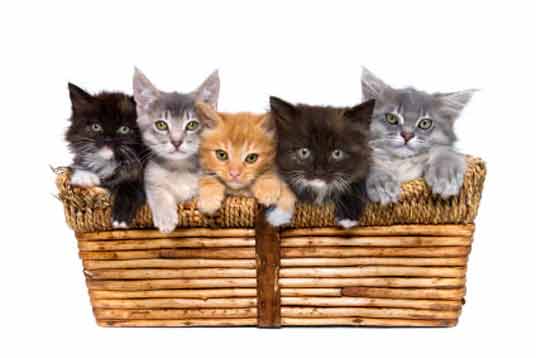
It is not unusual for LA Animal Services to take in 1,000 to 1,500 orphans a month in April, May and June and around 1,000 a month in July through September. This phenomenon occurs at thousands of shelters across the United States every year. While many shelters, like LA Animal Services, have a robust foster program for taking in and nursing many of these orphans, no shelter can take in and care for all of them. It is best to not take these animals to a shelter if it can be avoided.
But if we don't take them to a shelter, what can we do with them? Most people do not know what to do when they encounter a litter of orphaned kittens in their yard. Yet, this happens all the time.
1. First, make sure the kittens are in fact orphaned. No one can take better care of these babies than the mother. If mama is taking care of them, let her continue to do so until they are weaned. You can provide her with fresh water and food daily. After they are weaned, (at around 8 weeks of age) take them to your local shelter or cat rescue agency to be spayed or neutered, vaccinated and placed for adoption. Ideally, after the kittens are weaned, you should trap the mother and take her in to be spayed too.
If there is no sign of the mother and it is clear that the kittens are in distress, it is best to take them in.
2. Call your local cat welfare, animal shelters and humane societies to find out if they have a kitten foster program and what their policies are.
3. Ideally, consider taking the kittens in and foster them yourself. No community has enough volunteers to care for all the orphans found each year. If you have kids of your own, this is an exceptional humane family project for teaching your kids about compassion. But understand, this is a big commitment. There are certain things that kittens really need, like the proper food, shelter and general care. It is important to even clean a kitten's genital area every few hours to stimulate them to urinate and defecate. It is important that you know what to do. Many shelters, like LA Animal Services, have classes that will equip you for effectively caring for these babies.
4. Here is an additional site with valuable information on caring for Newborn Kittens - Go to: Feral Cat Caretakers' Coalition.
Please share this information with your family, friends and neighbors. Together we can end the vicious cycle of unwanted births and premature deaths in our neigborhoods by intervening directly to save these lives and ensure they are spayed or neutered and placed into loving homes.
Wednesday, May 26, 2010
Will Work for Food
Innovative programs give feral cats jobs and prove their value to society.
 Brad Kollus wrote a great article about an innovative LA program in the current issue of Cat Fancy magazine. The article can also be found at Cat Channel.com. Here is an excerpt:
Feral cats are domestic cats that were born without human contact or handling. If these cats do not receive human contact within their first 8 weeks, humans will have a hard time taming them. According to the ASPCA, there are tens of millions of feral cats in the United States. For decades, these cats were seen as pests by some, and many were caught and killed.
But in the 1990s, a movement began. Advocates such as Alley Cat Allies, the Feral Cat Coalition and Alley Cat Rescue (who also feed feral cats) began using trap-neuter-return (TNR), which stops the growth of a colony’s size and allows the cats to live out their lives in dignity.
Feral Cats Go To Work
In 1999, Voice for the Animals Foundation (VFTA) in Venice, Calif., took another bold step. It realized that feral cats are part of our ecosystem and play an important role in controlling rodent populations and stopping the spread of diseases carried by rodents. If VFTA could find areas that needed rodent control, it could provide that area with feral cats, which would save the cats’ lives and protect humans from rodents.
VFTA’s first project was the Flower Market in Los Angeles, where it offered to provide feral cats as a way of taking care of the market’s rodent problem. It worked.
“A lot of people who worked at the flower market didn’t like cats,” says Melya Kaplan, founder and executive director of VFTA. “The flower market has a big aisle down the center leading into the loading dock. One day there was a huge cat which we had put in, and he was chasing a rat right down the center aisle. Everyone started applauding. It has actually changed peoples’ views of both ferals and cats in general.”
Click here to see CatChannel’s exclusive slideshow of working feral cats.
**Get the July 2010 issue of CAT FANCY to read the full article.**

Feral cats are domestic cats that were born without human contact or handling. If these cats do not receive human contact within their first 8 weeks, humans will have a hard time taming them. According to the ASPCA, there are tens of millions of feral cats in the United States. For decades, these cats were seen as pests by some, and many were caught and killed.
But in the 1990s, a movement began. Advocates such as Alley Cat Allies, the Feral Cat Coalition and Alley Cat Rescue (who also feed feral cats) began using trap-neuter-return (TNR), which stops the growth of a colony’s size and allows the cats to live out their lives in dignity.
Feral Cats Go To Work
In 1999, Voice for the Animals Foundation (VFTA) in Venice, Calif., took another bold step. It realized that feral cats are part of our ecosystem and play an important role in controlling rodent populations and stopping the spread of diseases carried by rodents. If VFTA could find areas that needed rodent control, it could provide that area with feral cats, which would save the cats’ lives and protect humans from rodents.
VFTA’s first project was the Flower Market in Los Angeles, where it offered to provide feral cats as a way of taking care of the market’s rodent problem. It worked.
“A lot of people who worked at the flower market didn’t like cats,” says Melya Kaplan, founder and executive director of VFTA. “The flower market has a big aisle down the center leading into the loading dock. One day there was a huge cat which we had put in, and he was chasing a rat right down the center aisle. Everyone started applauding. It has actually changed peoples’ views of both ferals and cats in general.”
Click here to see CatChannel’s exclusive slideshow of working feral cats.
**Get the July 2010 issue of CAT FANCY to read the full article.**
Subscribe to:
Posts (Atom)


 Posts
Posts


